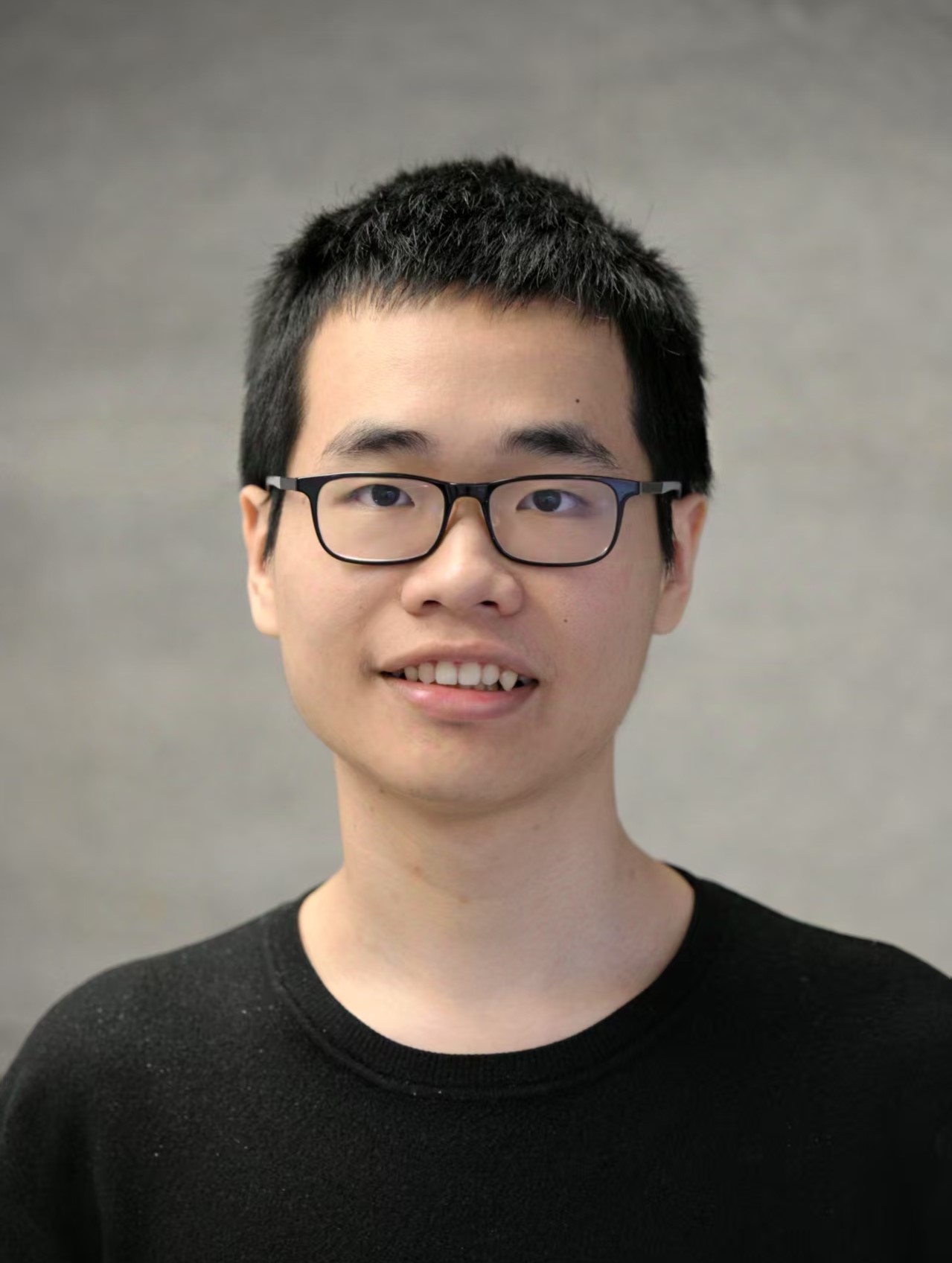
 Master Student in Computer Science @ USTC
B.Eng. in AI Talent Program, School of the Gifted Young @ USTC
My research interests lie broadly in designing efficient AI Inference systems, including Model Compression Algorithms (sparsification, quantization), High Performance GPU Kernels, and System-level Optimization.
Warning
Problem: The current name of your GitHub Pages repository ("Solution: Please consider renaming the repository to "
http://".
However, if the current repository name is intended, you can ignore this message by removing "{% include widgets/debug_repo_name.html %}" in index.html.
Action required
Problem: The current root path of this site is "baseurl ("_config.yml.
Solution: Please set the
baseurl in _config.yml to "Education
-
University of Science and Technology of ChinaMaster Student, School of Computer Science and TechnologySep. 2024 - present
-
University of Science and Technology of ChinaB.Eng. in AI Talent Program (Honor), School of the Gifted YoungSep. 2020 - Jul. 2024
Honors & Awards
-
Shenzhen Stock Exchange Scholarship2025
-
Master Student Academic Scholarship2024, 2025, 2026
-
Outstanding Student Scholarship Silver Award2022
-
Zhang Zongzhi Sci-Tech Scholarship2021
Selected Publications (view all )
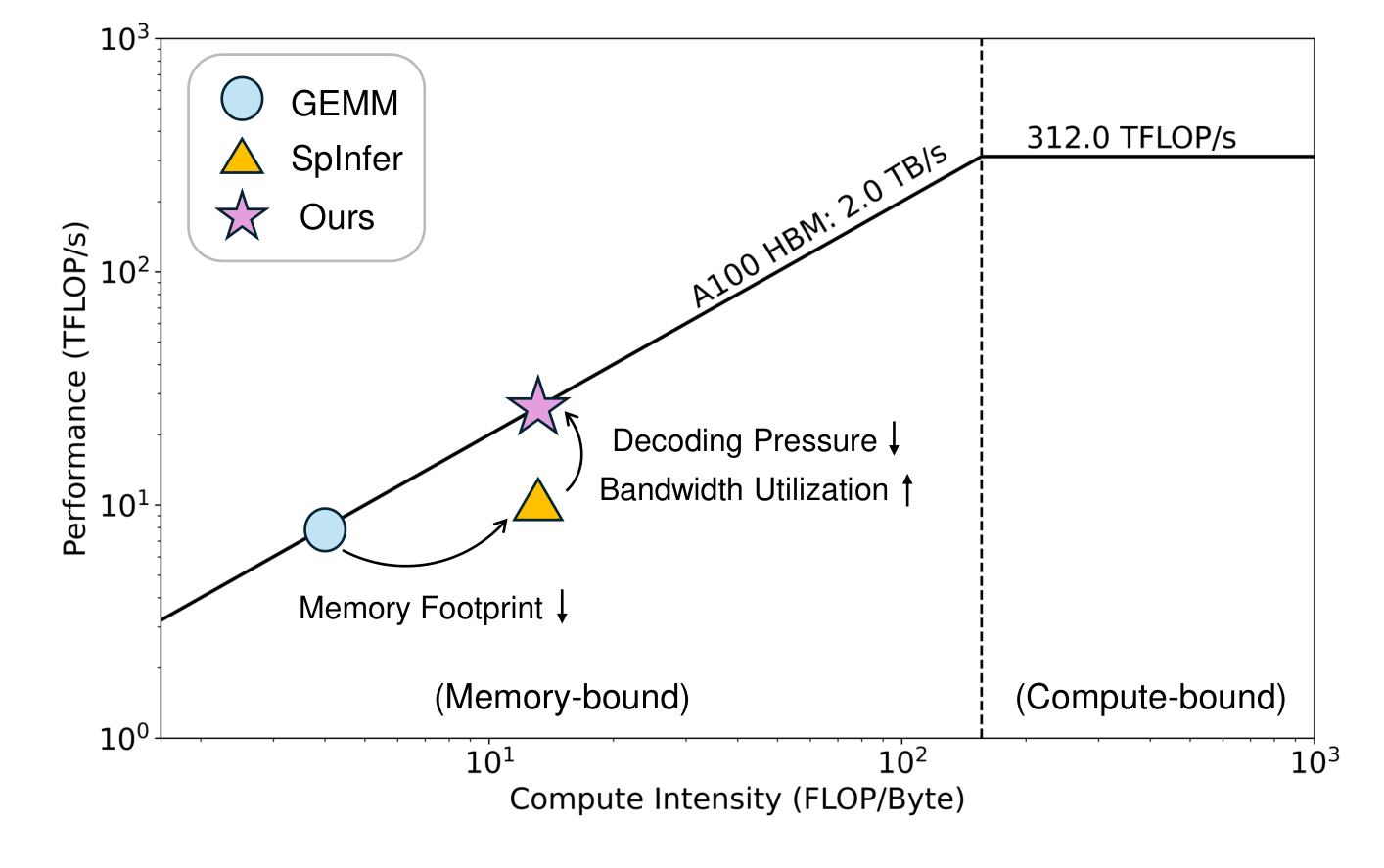
Bridging the Gap in SpMM Kernel at Low-Level Sparsity for Efficient LLM Inference
Mingge Lu, Jingwei Sun, Junqing Lin, Guangzhong Sun
IEEE International Symposium on High-Performance Computer Architecture (HPCA), 2027
This paper presents Sprite, a high-performance SpMM framework specifically designed to overcome the bitmap-decoding obstacles at low-level sparsity through sparse matrix storage and computation kernel co-design.
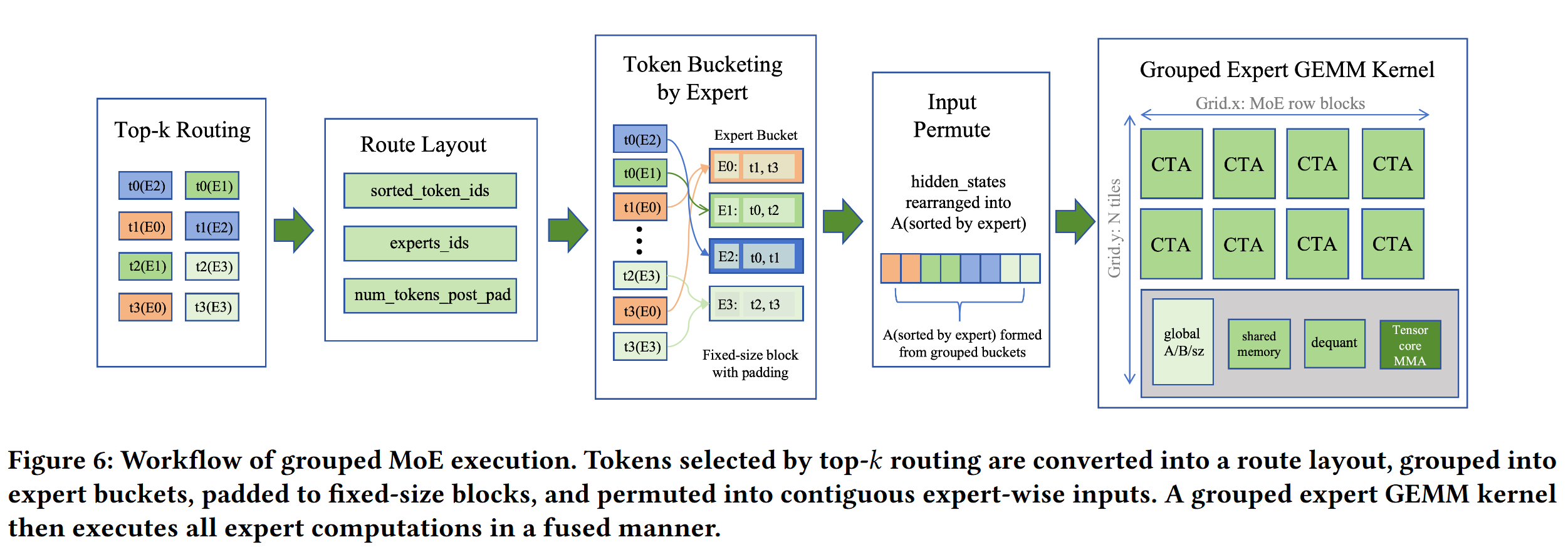
BR-MoE: A Memory-Budget-Aware Co-Design Framework for Efficient MoE Inference on Resource-Constrained GPUs
Lei Jiang, Jingwei Sun, Junqing Lin, Han Li, Mingge Lu, Yinghua Zhou, Guangzhong Sun
International Conference on Parallel Processing (ICPP), 2026
We present BR-MoE, a memory-budget-aware co-design framework that treats per-expert bit-width and compensator rank as joint variables under a single memory constraint.
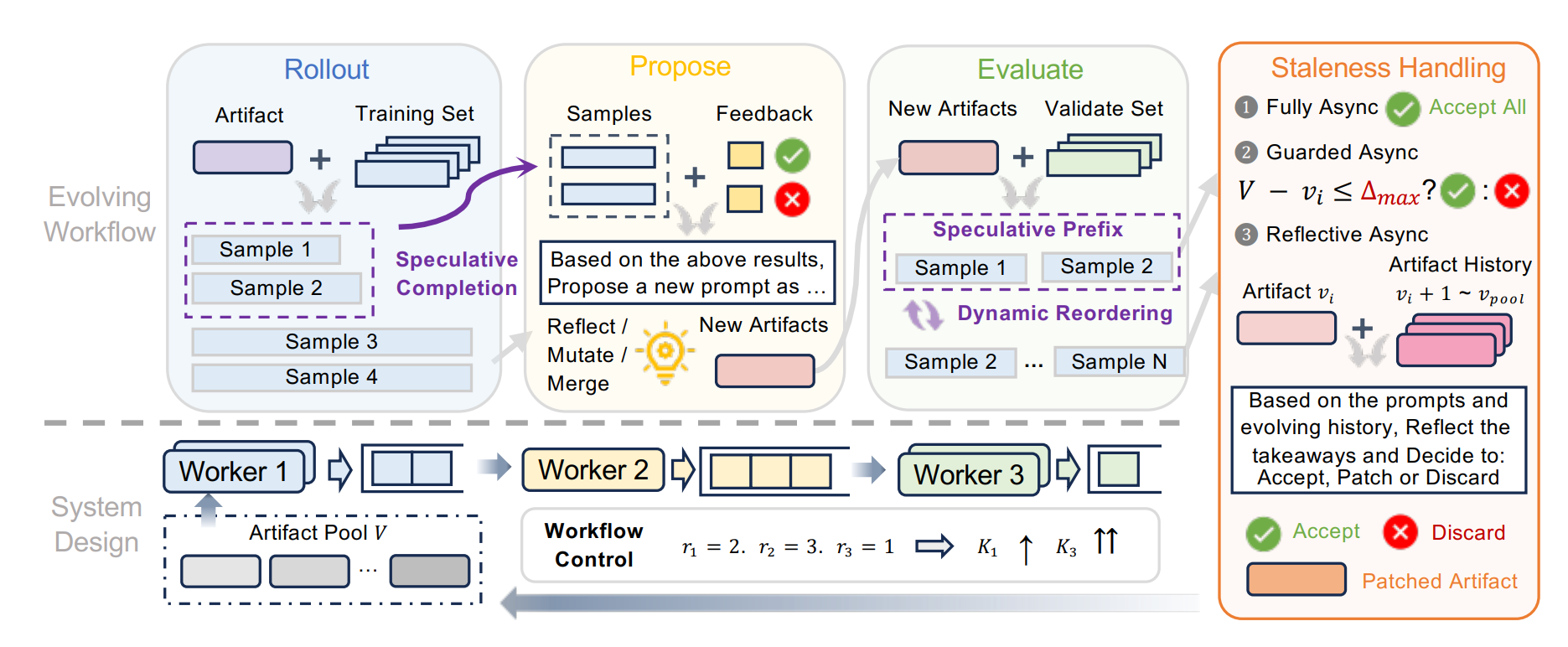
FlashEvolve: Accelerating Agent Self-Evolution with Asynchronous Stage Orchestration
Zhengding Hu, Mingge Lu, Zhen Wang, Jixuan Ruan, Chang Chen, Zaifeng Pan, Yue Guan, Ruiyi Wang, Zhongkai Yu, Chao Zhang, Yufei Ding
Advances in Neural Information Processing Systems (NeurIPS), 2026
We present FlashEvolve, an efficient framework that replaces synchronized execution with asynchronous workers and queues, allowing different stages and steps to overlap. To handle data staleness introduced by asynchrony, FlashEvolve tracks artifact versions and applies different policies to update, discard, or patch stale artifacts.
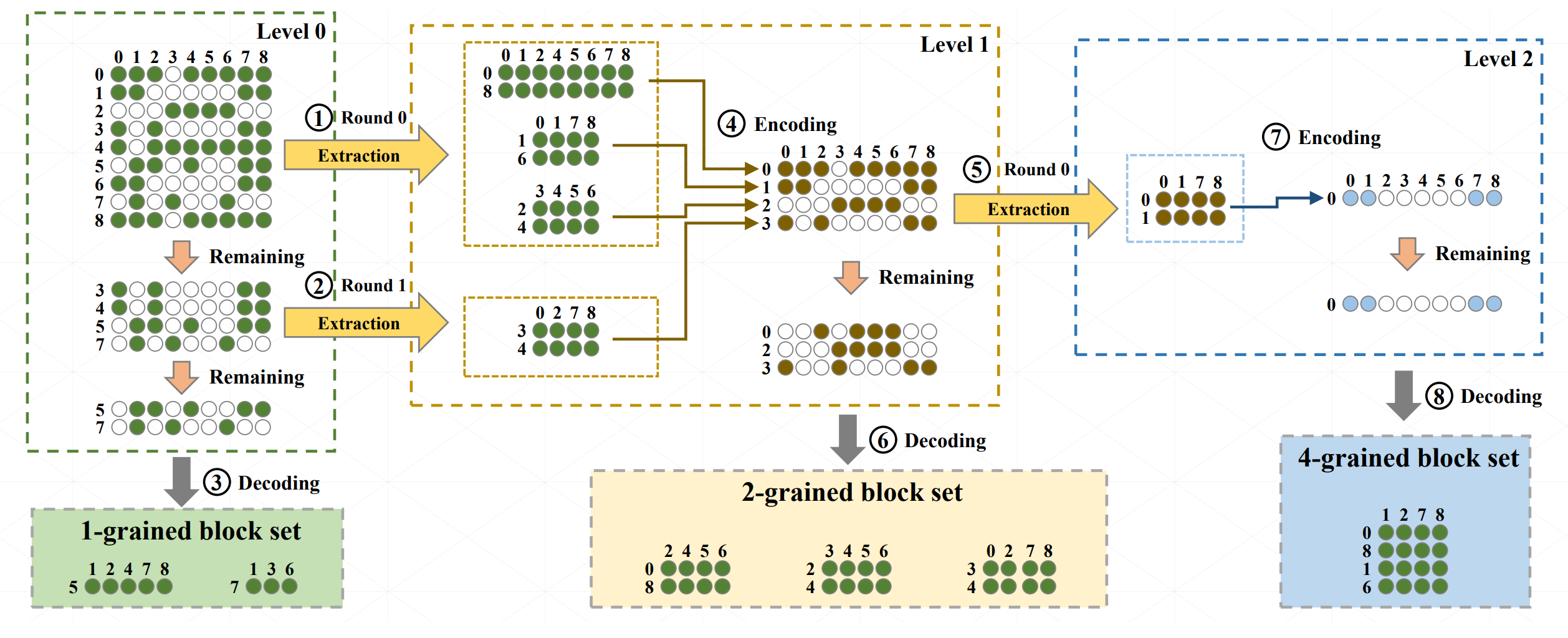
EC-SpMV: Toward Efficient SpMV in Sparse LLMs via Block Extraction and Compressed Storage
Junqing Lin, Jingwei Sun, Mingge Lu, Guangzhong Sun
ACM Transactions on Architecture and Code Optimization (TACO), 2026
This paper presents EC-SpMV, a GPU-optimized SpMV approach for accelerating sparse LLM inference. EC-SpMV introduces (1) a hierarchical block extraction algorithm that captures multiple granularities of block structures within sparse LLMs, and (2) a novel compressed sparse format (EC-CSR) that employs delta indexing to reduce storage overhead and enhance memory access efficiency.
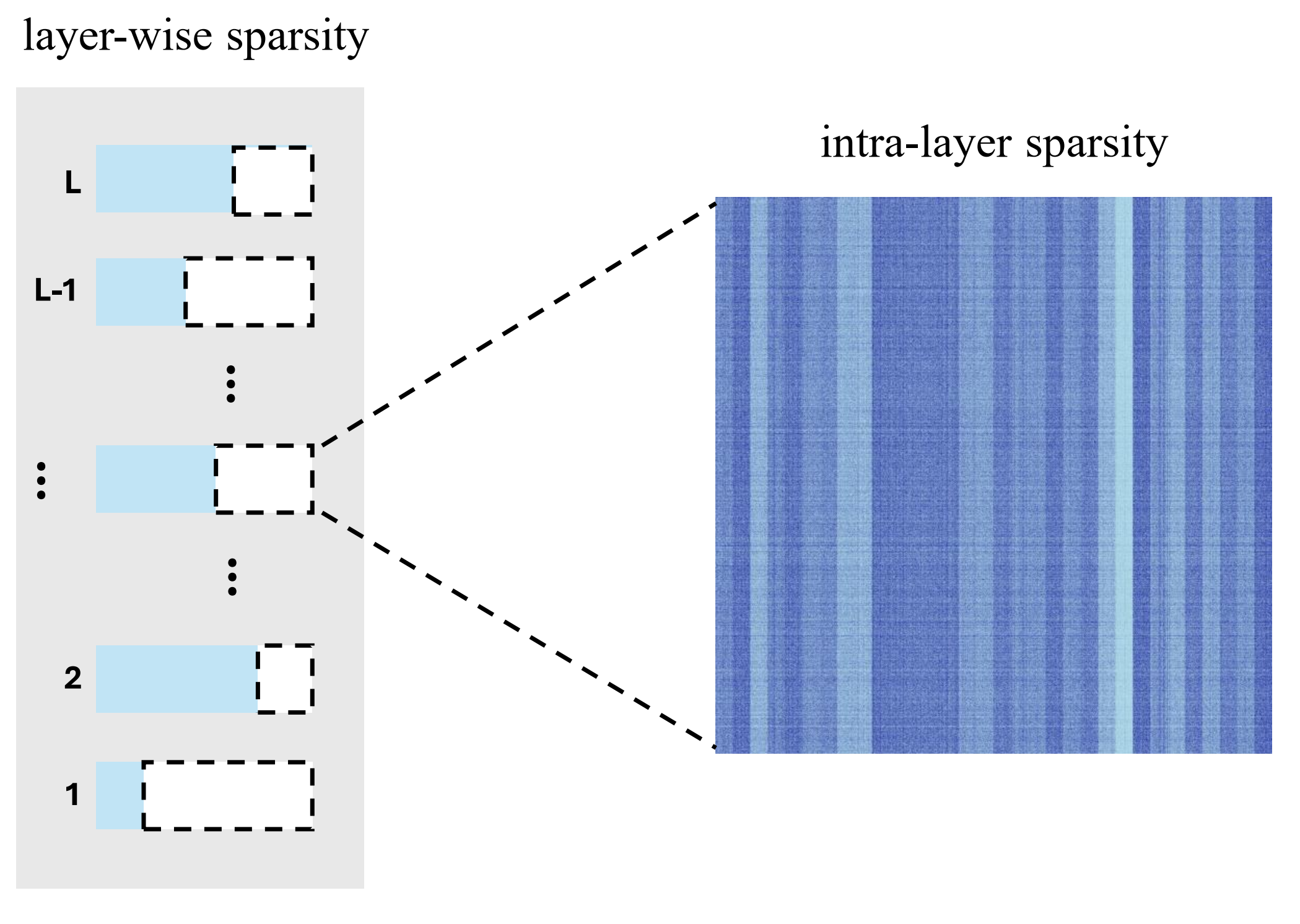
Lua-LLM: Learning Unstructured-Sparsity Allocation for Large Language Models
Mingge Lu, Jingwei Sun, Junqing Lin, Zechun Zhou, Guangzhong Sun
Advances in Neural Information Processing Systems (NeurIPS), 2025
We propose Lua-LLM (Learning unstructured-sparsity allocation in LLMs), a learning-based global pruning framework that explores the optimal unstructured sparsity allocation. Unlike existing pruning methods, which primarily focus on allocating per-layer sparsity, Lua-LLM achieves flexible allocation for both layer-wise and intra-layer sparsity.